
A transcript of a video by Pastor Bryan Wolfmueller
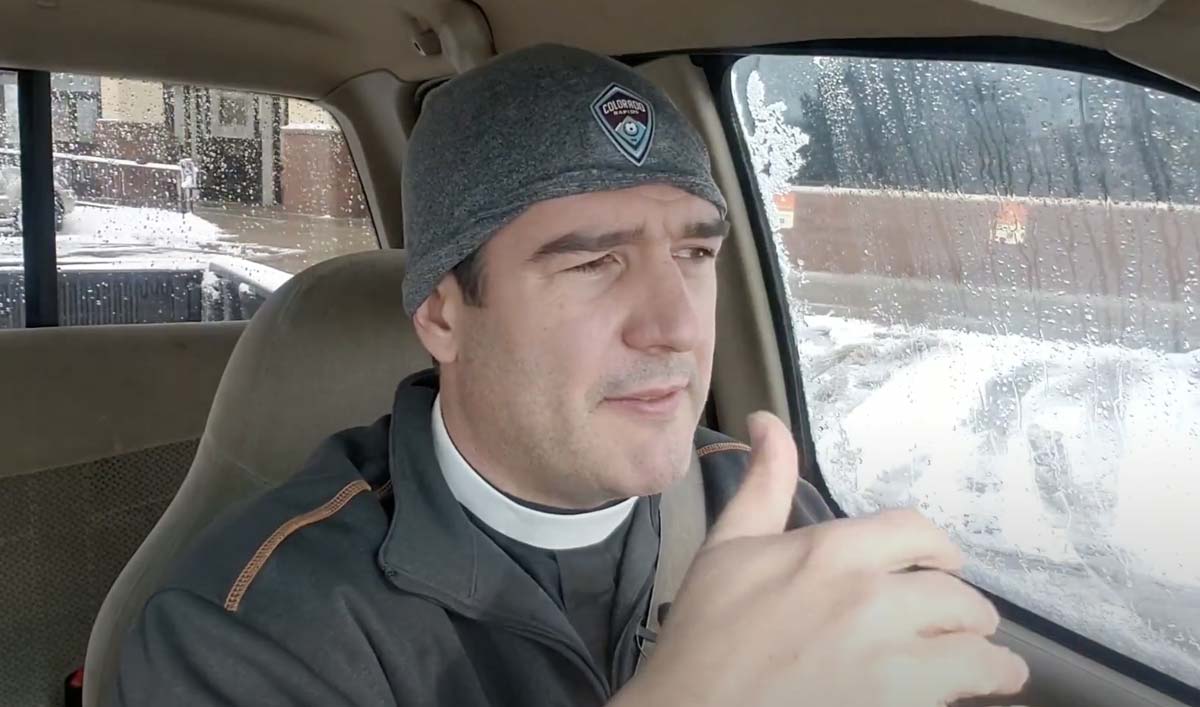
The following article is a transcript of a YouTube video by pastor Bryan Wolfmueller titled: “What is God’s will for my life? Good question, Keith”. Pastor Wolfmueller is from our sister synod in the USA (LCMS). He serves two congregations in Austin, Texas. He also has over 40,000 subscribers to his YouTube channel on which he regularly posts content for his ‘YouTube theologians’ (as he calls his listeners).
He has a gift for teaching profound theological truths in simple, every-day language. He often records his videos while driving. In this video, he is also on the road and responds to a question sent to him by a person called Keith. Here is a transcript of the video (shortened and slightly edited and for smooth reading):
The weather means that I have a couple of extra minutes in my mobile studio today, so I thought I’d take up a question from Keith:
“Hi Pastor, not to overwhelm you with video ideas (you do such a great job, thanks), but a very common statement I hear from other Christians is something along the lines of “I am waiting to see where God leads me” or “It’s a God thing.” People seem to have this idea that we are all puppets or that the course of their life is a mystery to be figured out each step of the way in order to do everything right. They like to make it seem like they have or are looking for access to supernatural information. Can you respond to that?”
I think this is a very good thing for us to reflect on because one question that you hear all the time is: “What is God’s will for my life”. And I think the picture that they have for living life as a Christian and for figuring out what God’s will is, is that they imagine that God has a perfect plan for me. They think that God has one track that I’m supposed to walk – God’s plan for me!
It is like there a thin line, a balance beam in the dark, that God wants me to walk on. I can’t see where my next step is, but God knows where my next step is. He hasn’t told me what my next step should be, and so I have to try to figure it out. I’m trying to somehow get access to this knowledge of what God’s will is or what God’s plan is. I’m trying to get access to that knowledge that God is holding from me. It is like God has a little file somewhere called “God’s perfect plan for Bryan’s life” and I’m trying to sneak into his office and look in his file to figure out what my plan is because he won’t tell me.
This leads to all sorts of strange Christian activity. I think it is like Witchcraft. I’m trying to discern or figure out the future. I’m trying to get access to these secret things that God hasn’t given me access to. And so, I’m looking for signs: open doors; little indications that I am making the right choice; studying the right thing; marrying the right person; pursuing the right career; taking advantage of the right opportunities; and so on.
And this is especially tricky for young people. So much of their life is ahead of them. There are so many unknowns. They are mostly looking forward. Now, as you get older and you look back, most of your life is in the past. But when most of our life is in front of us, then we’re especially tempted to this kind of thinking.
But what does the Bible teach us about God’s will? What does the Bible say God’s will for my life is? The answer is that God’s will for our life is that we would and keep the Ten Commandments. It’s not some sort of secret. The Lord has given us wisdom and his instructions are there in his law. This is what God tells us.
Now, people say: “But I want something more than that. I don’t just want the command to love God, and love my neighbour – to not murder and not commit adultery and not steal and so forth. I want to know what kind of job I should do. I want to know who I should marry.” Well, the point is this: As long as you are keeping God’s Commandments, you can marry whoever you want to marry, as long as they say yes.
Luther makes this really helpful distinction when he’s writing to Erasmus about the human will (De servo arbitrio, Bondage of the Will). He says that our will is bound towards the things above us. We cannot, by our own reason or strength, believe in the Lord Jesus Christ or come to him or accept him or believe in his word and the like. All of these spiritual gifts are given to us by the Spirit. The mind of the flesh cannot understand or receive the things of the Spirit of God, nor can it. We don’t have free will to choose God. But we do have free will towards our neighbour. You do have a free will towards your calendar. God has given you freedom to study what you want to study, to marry who you want to marry, to do what you want to do, or do what you think you would be best at to serve your neighbour. You are actually truly free to decide how your love ought to look.
Now, what’s amazing is that we always want to be creative when it comes to the gospel. You know, churches are always trying to be creative when it comes to preaching and worshiping. But that is not the realm of creativity. God has told us what the gospel is. But if you want to be creative, creativity comes into our life of love; our life of serving our neighbour. When it comes to what that love looks like towards your neighbour and your wife and your kids and so forth, there is a creativity involved. There are a million different ways that you can love your neighbour today – and all of them are great. The Lord doesn’t have one thing, one next step for you to do. There is a whole realm of possibilities that are all good.
It’s not like this balance beam, where there is only one right thing, and I have to pick what that one right thing is, or else I’m out of line with the will of God. When you sin, you’re out of line with the will of God. But when you love, when you keep the commandments, you are in God’s will, no matter if the love looks this way or the love looks that way. If you’re a student and you like engineering – God be praised. Or if you like creative writing – God be praised. If you like Agriculture – God be praised. All of those are good works, and all of them are God’s will for you. It’s not like there’s some sort of super-secret individualized plan for your life. God has given you this freedom.
Now, when we look back – when we turn around and look at the past – we can see that the Lord was working all of these things together for good. We see that the Lord was plotting and helping. When we look back, we can see it, and we can rejoice in it. But we’re not supposed to see it when we look forward. The Lord has hidden that from us. He has hidden the knowledge of the future from us for a good reason – so that we trust in him.
So, how do you know it was God’s will for you to marry the person that you’re married to? It’s because you’re married to them. You see God’s will looking backwards. But he’s hidden it from us looking forward.
This is where we really lean on the biblical idea of wisdom. It’s why the Lord gives us wisdom. He gives us wisdom through our elders and most especially through reading his word. Remember how David says: I have more insight than all my teachers, for I meditate on your statutes (Psalm 119:99). We turn to the Word for wisdom, and we trust this promise from James chapter 1: If any of you lacks wisdom, you should ask God, who gives generously to all without finding fault. God gives wisdom to all freely. We have this promise.
We pray that the Lord will give us wisdom through his Word, through our friends, through our elders and so forth. We look for wisdom. We are not looking for a secret revelation from God as if heaven is going to crack open. We don’t figure out God’s secret through some sort of act of Christian witchcraft. We are looking for wisdom in these things.
Maybe one more point on this, Keith. It is an interesting thing to note that when it comes to this idea of freedom above and freedom below, that the Evangelical Church in America – I guess in the whole world – has kind of flipped things on its head. It acts like we have freedom towards God and bondage towards the things below. They say: “I can make a decision for Christ. That is up to me. I have free will to decide if I want to be a Christian or not. But then I have to go and search God’s will to figure out what colour socks he wants me to wear today.”
There is the great danger in the reversal of freedom and bondage which happens in American Christianity. We want to know that God has not given me freedom to choose Christ. That belongs to faith, which is a gift of the Holy Spirit through the Word. But he has given me freedom towards this life. He has given me freedom when it comes to what my love ought to look like.
He has bound us in by the Ten Commandments; and when we are in that realm of the Ten Commandments, and not transgressing the boundaries that the Ten Commandments draw, then the Lord says: “Have at it. Rejoice in my freedom, choose, live, discern, love, go for it, be creative in the way that you live this life and know that I’m going to be pleased with it. You have a multitude of options every day, and I’m going to be pleased with one of them.”
So, Keith, I appreciate the question. I think you’re on to something there, and I hope this rambling helps.
Keith also asked about this: “It’s a God thing.” There is a problem with this kind of language – with this cliché, namely that it assumes that if there are things that are ‘God things’, then there are also other things that are not ‘God things’. This is dangerous. For example, when something surprisingly good happens that we didn’t expect, we say: “Well, that’s a God thing”. But then, what if something bad happens. Whose thing is that? Is that a devil thing?
What about what happened to Job? Was that a God thing? The Lord gives, the Lord takes away, blessed be the name of the Lord. … Shall we receive good from the hands of the Lord and not evil. (Job, chapter 1).
So, if you just look back at everything that happened – not only that unexpected letter came from an old friend or something like that, but also that time when you got terrible news – you can say: “It’s all a God thing.” The Lord has established his throne in heaven, and his kingdom rules over all (Psalm 103:19). The Lord reigns, let the earth be glad (Psalm 97:1). Everything is a ‘God thing’.
What we certainly want to say is that the Lord works directly in our lives through the Word! When we hear the Lord’s word read, taught, preached, expounded, then we say: Now that! That is a God thing! When my sins are forgiven: That is a God thing! This is the particular work of God in this world. It might not surprise us. It might be totally expected. We go to church and hear the Lord’s Word. We open up our Bible in the morning and we hear of his kindness. That is where God is doing what he wants to do – his essential work, to save us, and delivers from our sins. That is really what we should be talking about when we say: “It’s a God thing”.
Alright, there you go, Keith.