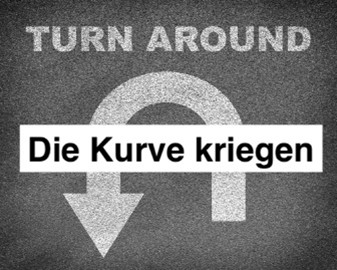
“Die Kurve kriegen” is a handy and descriptive German expression. A direct translation would be “getting the curve”. A translation for meaning would give us “getting your act together just in time”. At our last synodical convention we were privileged to hear a speaker from our North American Sister Church, Pastor Dr. Jeffrey Skopak. He spoke about “New Curves for the Ministry in Challenging Times!” If we look at the membership of his and our church bodies, we are faced with sobering numbers. We need new curves. But, as Skopak showed us, these curves start in places, at moments and in ways we might not expect.
“Shuv” is a Hebrew word (root) that appears over 1000 times in the Old Testament. Its basic meaning is “to turn” or “to return”. The first time it appears is in Genesis 3, where God points Adam down to his future, “…till you return to the ground, for out of it you were taken; for you are dust, and to dust you shall return.” While the serpent had falsely promised our ancestors a curve growing steeply upwards, bringing them into the lofty company of God himself, the reality of sin and death sent them on a different curve, racing downhill, fast. This establishes a pattern for human behaviour. As the tower of Babel is rising, so is the self-esteem of the builders (Genesis 11). That is, until God descends to rain on their parade and returns them to His original mandate. Solomon teaches us from his own experience: “Pride goes before destruction and a haughty spirit before a fall.” (Proverbs 16:18) When we reach our “Golden Age”, what we think to be the top of the curve, confusing “big” with “great”, we are most at risk of forgetting whose we are and why we are here. The fall hurts.
The impact may see us broken. However, this is not the worst place for the people of God to find themselves in. “Shuv” is also used to describe repentance. God breaks our idols and returns us to His image, stewards of His hopeful, forgiving and life-giving Word. He teaches us to pray, not trusting in ourselves, but putting our trust only in Him, expecting everything good from Him. He teaches us to consider the future and plan from the perspective that He wants everyone to be saved and come to the knowledge of Him (1 Timothy 2). He opens our eyes to opportunities for us to grow in serving Him, there where He is hiding behind the “least of us” (Matthew 25). He gifts us the humility we need to reach out to fellow creatures, to work together on His team, to learn from our mistakes. He does not want us to sit around moping about what we have lost, but as a friend of Pastor Skopak put it: “For the love of God… DO something!”
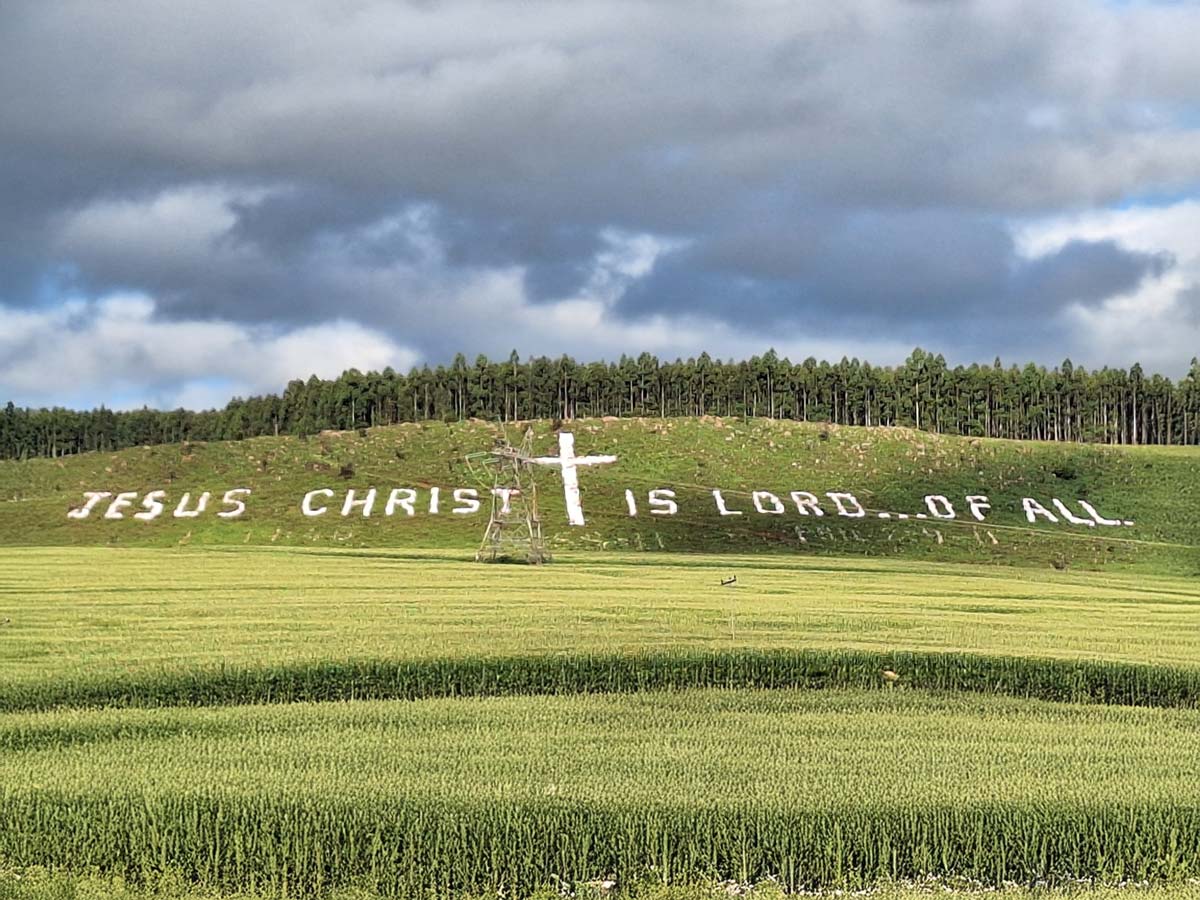
We can afford to take these risks because He has already done it for us. St Paul points us to the greatest curve in history: “…Christ Jesus, who, though he was in the form of God, did not count equality with God a thing to be grasped, but made himself nothing, taking the form of a servant, being born in the likeness of men. And being found in human form, he humbled himself by becoming obedient to the point of death, even death on a cross. Therefore, God has highly exalted him and bestowed on him the name that is above every name, so that at the name of Jesus every knee should bow, in heaven and on earth and under the earth, and every tongue confess that Jesus Christ is Lord, to the glory of God the Father.” (Philippians 2)
Following this pattern, He has similar curves in mind for us. I return to words we heard at our previous synodical convention in Pretoria originally written by Jeremiah to those exiled in Babylon: “Thus says the Lord: …For I know the plans I have for you, declares the Lord, plans for welfare and not for evil, to give you a future and a hope. Then you will call upon me and come and pray to me, and I will hear you.” (Jeremiah 29)
„Die Kurve kriegen“ ist ein treffender deutscher Ausdruck. Gerade bevor es richtig schief geht, wacht man auf und verändert den Kurs. Es kann wieder aufwärts gehen. Auf unserer letzten Synode hatten wir das Vorrecht, einen Redner aus unserer nordamerikanischen Schwesterkirche zu hören, Pastor Dr. Jeffrey Skopak. Er sprach über „New Curves for the Ministry in Challenging Times!“. Wenn wir uns die Mitgliederzahlen seiner und unserer Kirchen anschauen, stehen wir vor ernüchternden Zahlen. Wir brauchen neue Kurven. Aber, wie Skopak uns zeigte, beginnen diese Kurven an Stellen, in Situationen und auf Wegen, die wir vielleicht nicht erwarten.
„Shuv“ ist ein hebräisches Grundwort, das im Alten Testament über 1000 Mal verwendet wird. Seine Grundbedeutung ist „wenden“ oder „zurückkehren“. Das erste Mal taucht es in Genesis 3 auf, wo Gott Adam auf seine Zukunft hinweist: „…bis du wieder zu Erde wirst, davon du genommen bist. Denn Staub bist du und zum Staub kehrst du zurück…“. Während die Schlange unseren Vorfahren eine steil nach oben führende Kurve versprochen hatte, die sie in die erhabene Gesellschaft von Gott selbst bringen würden, führte die Realität von Sünde und Tod sie auf eine andere Kurve, steil bergab. Wir erkennen ein Muster für menschliches Verhalten. Während der Turm von Babel in die Höhe wächst, wächst auch das Selbstbewusstsein der Baumeister (Genesis 11). Zumindest so lange, bis Gott herabsteigt, um ihnen einen Strich durch die Rechnung zu ziehen und sie zu seinem ursprünglichen Auftrag zurückzubringen. Salomo lehrt uns aus eigener Erfahrung: „Hochmut kommt vor dem Fall.“ (Sprüche 16). In dem Moment, in dem wir unser „Goldenes Zeitalter“ erreichen, das, was wir für den Gipfel der Kurve halten, wobei wir schnell „groß“ mit „großartig“ verwechseln, laufen wir am ehesten Gefahr, zu vergessen, wessen wir sind und warum wir hier sind. Der Sturz ist schmerzhaft.
Der Aufprall kann uns zerbrechen lassen. Für das Volk Gottes ist dies jedoch nicht der ungünstigste Ort sich zu befinden. „Shuv“ wird auch verwendet, um Buße oder Umkehr zu beschreiben. Gott zerbricht unsere Götzen und macht uns wieder zu seinem Ebenbild, zu Haushaltern seines hoffnungsvollen, vergebenden und lebensspendenden Wortes. Er lehrt uns zu beten, nicht auf uns selbst zu vertrauen, sondern unser Vertrauen nur auf ihn zu setzen und alles Gute von ihm zu erwarten. Er lehrt uns, an die Zukunft zu denken, zu planen vom Grundgedanken her: Er möchte, dass alle Menschen gerettet werden und zur Erkenntnis der Wahrheit kommen (1. Timotheus 2). Er öffnet uns die Augen für Gelegenheiten, durch die wir wachsen können, indem wir ihm dienen, wo er sich hinter den „Geringsten von uns“ (Matthäus 25) verbirgt. Er schenkt uns Demut, die wir brauchen, auf unsere Mitkreaturen einzugehen, um in Seinem Team zusammenzuarbeiten, um aus unseren Fehlern zu lernen. Er will nicht, dass wir herumsitzen und über verlorene Vergangenheiten jammern, sondern, wie ein Freund von Pastor Skopak es ausdrückt, „um Gottes willen … tut etwas!“.
Wir können es uns leisten, Risiken einzugehen, weil Er es bereits für uns vollbracht hat. Der Apostel Paulus weist uns auf die größte Kurve der Geschichte hin: „Er, der in göttlicher Gestalt war, hielt es nicht für einen Raub, Gott gleich zu sein, sondern entäußerte sich selbst und nahm Knechtsgestalt an, ward den Menschen gleich und der Erscheinung nach als Mensch erkannt. Er erniedrigte sich selbst und ward gehorsam bis zum Tode, ja zum Tode am Kreuz. Darum hat ihn auch Gott erhöht und hat ihm den Namen gegeben, der über alle Namen ist, dass in dem Namen Jesu sich beugen sollen aller derer Knie, die im Himmel und auf Erden und unter der Erde sind, und alle Zungen bekennen sollen, dass Jesus Christus der Herr ist, zur Ehre Gottes, des Vaters.“ (Philipper 2)
Nach diesem Muster hat er ähnliche Kurven für uns im Sinn. Ich komme auf die Worte zurück, die wir auf unserer letzten Synode in Pretoria gehört haben und die ursprünglich von Jeremia an die Verbannten in Babylon geschrieben wurden: „Denn so spricht der Herr: … Denn ich weiß wohl, was ich für Gedanken über euch habe, spricht der Herr: Gedanken des Friedens und nicht des Leides, dass ich euch gebe Zukunft und Hoffnung.“ (Jeremia 29)