Interview between the members of the FELSISA Witness Team
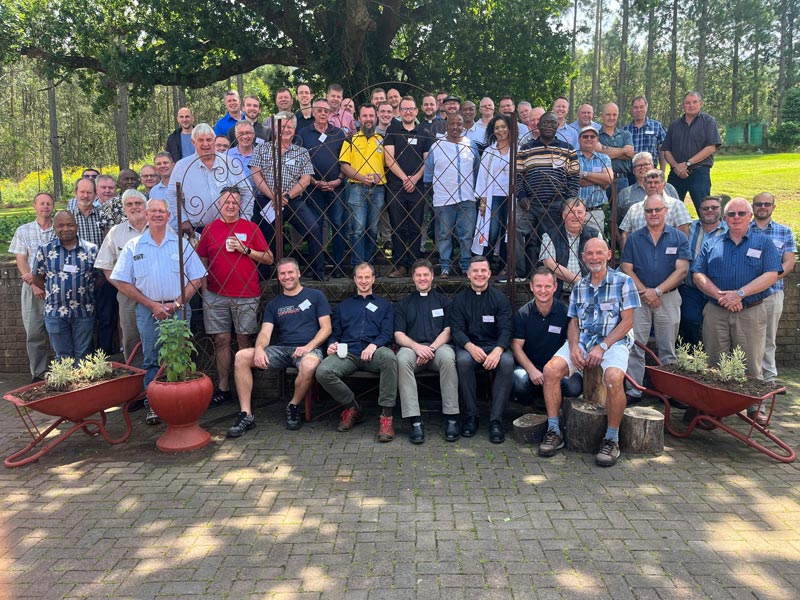
Angelika: This is an interview between the members of the FELSISA Witness Team about the connection between Confession and Absolution on the one hand and the Lord’s Supper on the other. Ms. Angelika Johannes asks the questions, while pastors Andreas Albers and Werner Straeuli answer the questions.
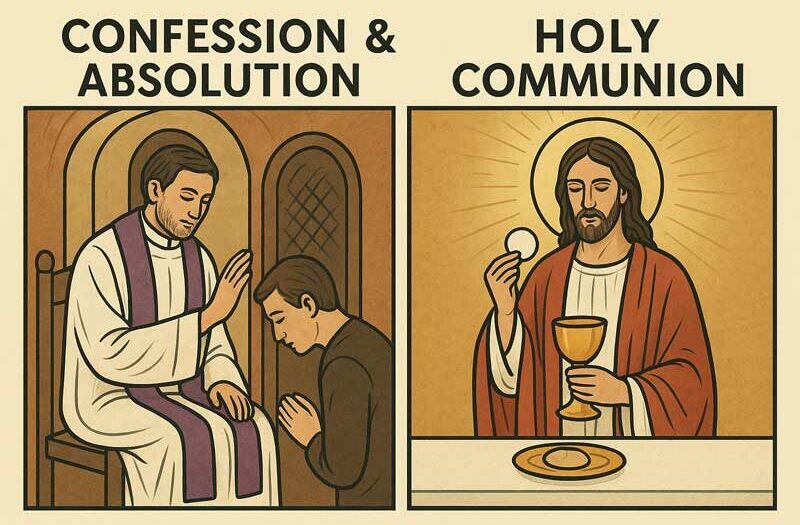
Many of our FELSISA congregations have a separate confession and absolution service before the divine service on Sunday mornings. Others have confession and absolution at the beginning of the divine service. Even others have confession without individual absolution by the pastor. Why is there a difference in these practices within our synod?
Werner: There is no single, explicit New Testament liturgical blueprint for how confession and absolution must be arranged, and over the centuries Lutheran practice developed different—but biblically grounded—forms. The important point is content and authority, not uniform ceremony. Confession and absolution are rooted in Scripture (Old Testament rites and examples; David’s confession; Ps. 32; Prov. 28) and in Christ’s giving of authority to his church to forgive sins (Matt. 16; 18; John 20). The Lord’s Supper itself is for the forgiveness of sins (Matt. 26), and Paul’s call to “examine yourselves” before communing (1 Cor. 11) shows the need for sober preparation.
Because the New Testament supplies theological substance rather than one fixed order, legitimate pastoral practice may look different: private confession and individual absolution, a corporate confession service before Communion, or a confession-and-absolution section within the Divine Service. Historical and practical factors shaped these choices in our synod — how often the Supper was celebrated, registration practices, pastoral availability in multi-parish situations, and local custom all played a role.
Our synod’s norms encourage preparation (including confession) but do not impose one compulsory form. Pastoral care must therefore safeguard two things: fidelity to Christ’s institution and merciful attention to consciences. Confession and absolution rightly prepare communicants for the Sacrament, but they must not become legalistic barriers that exclude repentant souls. Whether received privately, corporately, or together with the Lord’s Supper, the promise remains: sinners are forgiven in Christ.
Angelika: Do I have to go to a Confession and Absolution Service and receive absolution through the hands of the pastor before I go to Communion?
Andreas: The simple answer to your question is “no”. If it were a requirement, Luther would have included it in the answer to the question he poses in the Small Catechism: “Who receives this sacrament worthily?” This is his answer: “Fasting and bodily preparation are certainly fine outward training. But that person is truly worthy and well prepared who has faith in these words: ‘Given and shed for you for the forgiveness of sins.’ But anyone who does not believe these words or doubts them is unworthy and unprepared, for the words ‘for you’ require all hearts to believe.” Luther does not mention Confession and Absolution. Rather, he mentions faith in Christ’s words. In Luther’s time, there were also no corporate confession and absolution services as we have them in some of our congregations, but only private confession and absolution. The corporate confession service is a more recent addition to Lutheran tradition.
Werner: No, you do not have to go to a Confession-and-Absolution service in order to receive the Lord’s Supper. The decisive thing is a repentant heart and faith in Christ’s words, not attendance at a particular rite.
That said, the various official rites of Confession and Absolution in Lutheran practice — private confession, corporate confession, or a confession section within the Divine Service — help a person examine both their relationship with God and with their neighbour, and are so a rightful and valuable means of preparing to receive the Sacrament. Paul’s call to “examine yourselves” reminds us that we should come soberly and repentant; corporate or private confession can be a very good way to do that. But it must never be treated as a new law or a rigid gatekeeper to the Sacrament.
Regarding our Confession’s statement that we “never allow anyone who is not absolved”(AC 25): This rightly upholds the necessity of repentance. But “absolved” here refers to the broader reality of a penitent heart trusting Christ’s promise—not narrowly to having completed a specific rite. Paul’s call to “examine yourselves” (1 Cor. 11) is fulfilled through faith-driven repentance, whether expressed privately, corporately, or inwardly before God.
Angelika: Still it seems that in some congregations, it is considered a pre-requisite to go to go confession and absolution before receiving the Lord’s Supper? How are we to understand this?
Andreas: Luther explains that we need faith in Christ’s words “for you”. As worthy recipients of Christ’s body and blood in the sacrament, we are therefore to believe that we ourselves are sinners, and that Christ has given his body and shed his blood ‘for us’ and for our sins. In a way, then, to confess our sins is a pre-requisite for communion. But confession can be done in various ways. Yes, we can certainly attend a confession service, in which the pastor also pronounces absolution individually. But there are many ways in which one can prepare for communion apart corporate confession on Sunday morning. I don’t want to discourage anyone from making use of the corporate confession on a Sunday morning – it is truly a blessed custom. What I do want to encourage, though, it to appreciate the gift Confession and Absolution in its own right. Confession and Absolution is a blessing in and of itself. The Absolution, the forgiveness of our sins in the stead and by the command of the risen Christ, is a special gift of our Lord to his church, especially to anyone with a burdened conscience. Too often, I think, Confession and Absolution is seen as purely as a preparation for communion. There might also be the notion that, before I come to the Lord’s table, I need to be ‘purified’ by the Absolution. However, we don’t come to the Lord’s table as holy Christians, who have already been cleansed beforehand. No, we always come to the Lord’s table as needy sinners, whether or not we have received the gift of the Absolution an hour or so earlier.
Werner: It’s true that in some congregations, attending Confession and Absolution before the Lord’s Supper is perceived or expected as a prerequisite. However, it’s important to clarify that no FELSISA congregation officially has this as a prerequisite written into its constitution or practice. What we see is often a tradition that has grown over time within specific congregational contexts. Traditions themselves aren’t necessarily bad—when they faithfully point us to Christ and His forgiveness, they can be deeply meaningful. The danger arises when these traditions subtly transform into a new ‘law’—whether formally imposed or merely perceived by the congregation. That burdens consciences and distorts the Gospel.
Angelika: It was mentioned that there are other ways in which we can prepare for communion apart from corporate confession on a Sunday morning. What are these other ways?
Andreas: As I said, I don’t wish to discourage anyone from also making use of the confession and Absolution services, wherever they are offered. Apart from these services, though, we can already prepare ourselves at home on Saturday evening or Sunday morning, for example, by reading a confession mirror. Also, the divine service and the liturgy itself is designed in such a way as to prepare us for the reception of Christ’s body and blood. We begin the Liturgy by submitting ourselves under the name of the Triune God – Father, Son and Holy Spirit. By invoking God’s name, we confess in whose name we have gathered, and to whom we belong since our baptisms, when we were baptized into his holy name. We then confess our sins. We sing the Kyrie Eleison – Lord, have mercy. We hear God’s Word. We confess our faith with the creed. We hear a sermon – in which the pastor proclaims Christ as our Saviour from sin. We sing the Offertory, which is an excerpt from the Penitential Psalm 51 – “create in me a clean heart…”. We pray the Lord’s Prayer, in which we ask our heavenly Father to “forgive us our sins, as we forgive those who trespass against us.” You see, the whole divine service helps prepare us to receive the Sacrament rightly.