
Rev. James Woelmer Christ Lutheran Church Manhattan, Kansas. Presented to pastors in the Free Evangelical Lutheran Synod in South Africa on the 2nd December 2025
In 1528, Martin Luther visited the churches in his territory. He was shocked by how little the people knew about the Christian faith. Even some pastors were unfit and unable to teach it properly. In response, he wrote the Small Catechism in 1529 to address this widespread lack of understanding.
The Small Catechism provides a simple and clear explanation of the basic truths of Christianity. Luther intended it as a tool for parents and pastors to teach children and households the essential teaching of the Christian faith.
The catechism offers an easy-to-understand summary of Christian doctrine. It teaches the Ten Commandments, the Apostles’ Creed, and the Lord’s Prayer as its foundation, along with explanations of Baptism, Confession, and Holy Communion. It also includes daily prayers and a table of duties for Christian living. Through it we learn what God commands, what He has done for us, how we are to pray, and how He gives us His gifts of forgiveness, life and salvation.
While the Small Catechism is an invaluable resource for adult and youth confirmation classes, its pocket-sized format also makes it useful for promoting your church, sharing with friends and neighbors, and for outreach efforts. I distribute the paper back edition published by Concordia Publishing Hourse titled, “A Simple Explanation of Christianity.”
The purpose of this paper is to describe how I share the Gospel with the unchurched in my community. The pocket-size catechism is one of the resources I give to those I meet.
What is evangelism? Evangelism is the proclamation of the Gospel. We tell people who Jesus is and what He has done for us and for our salvation through His cross and empty tomb. We all suffer in this fallen world, and its pain is real. Yet there is comfort and peace in Christ. God is a God of mercy and compassion. The cross of Christ reveals God’s love for us, and Jesus rose from the dead. Therefore, in Christ there is the forgiveness of sins. We are loved by God, our Creator and Redeemer.
Evangelism also includes inviting people to church, where they confess their sins and hear forgiveness spoken directly to them. There they witness Baptism, whether of an infant or an adult. They hear repentance and the forgiveness of sins proclaimed from the pulpit. They see God’s people receive the body and blood of Christ from the altar. They hear the liturgy and hymns sung to the glory of God. The Divine Service on Sunday morning is the heart and center of the Gospel.
Thus, evangelism is not only telling people about Jesus; it is also inviting them to the place where Jesus Himself promises to be present with His gifts. The Church is not a hindrance to evangelism. It is the place where faith in Christ is created and nourished by the Gospel in Word and Sacrament.
The Holy Spirit brings people to faith in Christ by the written and spoken Word of the Gospel. He converts the sinner from unbelief to faith in Christ. God graciously uses us as His messengers of the Gospel.
Evangelism is not about getting people to “pray a prayer” or to “accept Jesus” but about simply and faithfully talking of who Jesus is and what He has done for us and for our salvation. We avoid any implication that the human will plays a part in conversion. We do not rely on emotional manipulation and “altar calls.” Instead, we proclaim God’s grace and mercy in Christ Jesus, and we invite people to hear and receive His gifts in the Church.
Let me now share with you my journey. I have always had a passion for telling people about Jesus. When I was in college, I participated in a youth organization called “Ongoing Ambassadors for Christ,” which went door-to-door sharing the Christian faith. During a summer vicarage in Florida, I helped a church plant get started by surveying the area. I identified the unchurched and invited them to attend our church service.
I was ordained in 1990. My first parish was in rural Nebraska. Even there, I surveyed a five-mile radius around the church seeking those who did not attend a Church. I found several unchurched families. I even baptized all of the children in a certain family.
In 2002, I took a call to a suburban church outside of Dallas, Texas. Since it was a very large congregation in an area of over one million people, I did not survey the entire community. Instead, I contacted those who visited our church on Sunday mornings. I was proactive in visiting prospective members in their home.
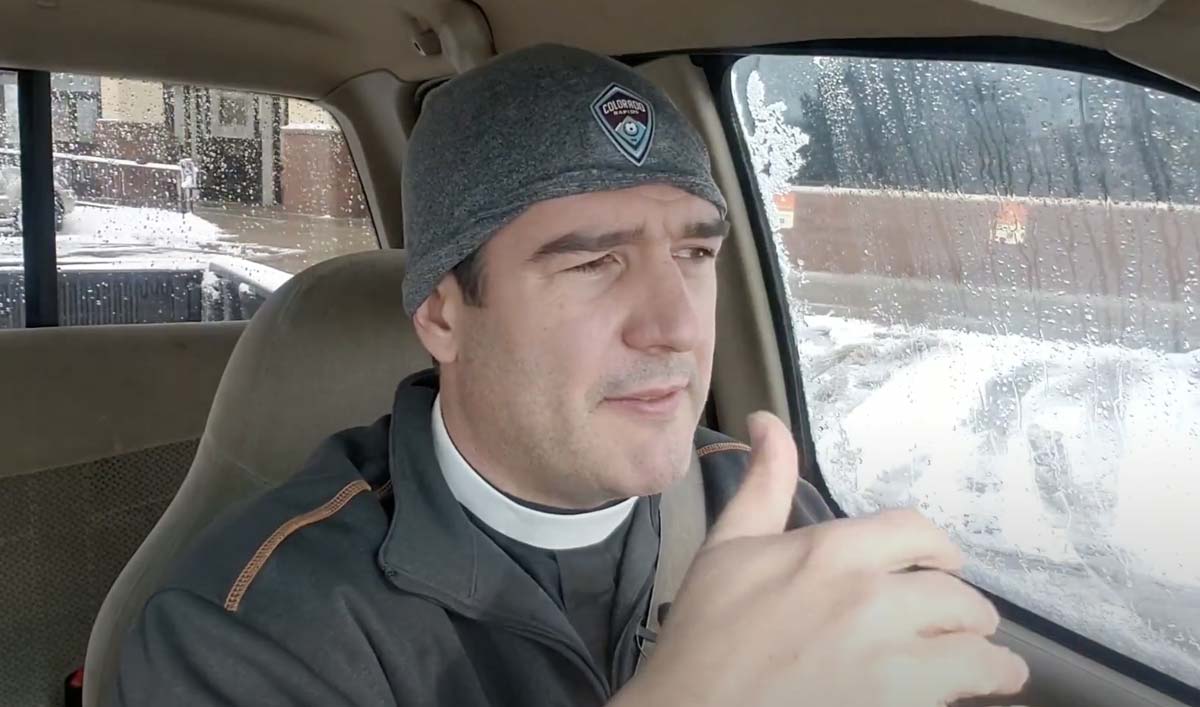
In 2023, I accepted a call to Christ Lutheran Church in Manhattan, Kansas. I was called to revitalize a congregation that was in decline. At that time, only fifteen people attended Sunday morning services. Because I had time available, I used it to introduce myself and our congregation to the community. My goal was to identify only the unchurched in the neighborhood, to share the Gospel with them, and to invite them to church. I purposely wore my collar so people would know I was a pastor.
I stopped at 1,394 homes. About thirty percent of the residents were not home. When someone answered the door, I would say, “Hi. I am the new pastor at Christ Lutheran Church. I am introducing myself to the community.” Many joyfully responded, “Welcome to our community.” Then I would ask, “Do you have a church?” I like this question because it is simple and direct. They either attend a local church or they do not. I do not ask, “If you were to die tonight, how do you know you would go to heaven?” I do not tell them why I like my church or share my personal faith story. These things are subjective.
When I asked, “Do you have a church?” sixty-five percent (622 households) said they attended a local congregation. They liked their church and their pastor. Even if their church might not have been faithful to the Scriptures, my goal was not to argue theology. I simply commended them for having a church home and encouraged them to continue attending.
About thirty-five percent (345 households) were not members of any church. Some were honest and said they were not interested in Christianity. I was heartbroken, but I respected their honesty. Sadly, unbelief is a reality. Some reject the Gospel and resist the Holy Spirit.
I was able to share the Gospel with 281 people. Many told me why they no longer attend church. Some were frustrated that their church had conformed to the ways of the world. Others had been deeply hurt by cruel remarks made after the death of a child. Some stopped attending during COVID and never returned.
I could share many more stories about why people left the church. I listened intently and responded with the Gospel as it applied to their situation. When you talk with an unchurched person, listen to their hurt and pain. Ask questions, and always respond with the Gospel. You do not need evangelism training, just talk about Jesus, who He is, and what He has done for our salvation through the cross and the empty tomb.
Some people stepped outside and talked with me about theology on their porch. I could tell when others were cold or uninterested. At the very least, I would say, “The cross of Christ defines God’s love for you. Come to our church and hear about Jesus’ death and resurrection.” If they were open to hearing more, I spoke further about sin, God’s grace in Christ Jesus, and the forgiveness of sins.
If they had small children, I asked, “Are your children baptized?” If not, I said, “I would be glad to baptize them. Here is a Small Catechism that talks about Baptism.” If someone said, “I watch church online,” I responded, “You cannot receive the Lord’s Supper online. I would be glad to teach you about Christ’s gift of His body and blood in Holy Communion. Here is a Small Catechism that explains the Sacrament of the Altar.” If they left their church because it conformed to the ways of the world, I said, “Here is a Small Catechism. It lists the Ten Commandments and at Table of Duties. Our church stands for life, marriage, and family.”
I concluded each visit by giving them a brochure about our church and a copy of the Small Catechism. I asked for their name. Many gladly shared it. I thanked them for our visit and invited them to attend our church. As I walked to the next home, I wrote down their name and address.
I give the unchurched the Small Catechism because I want them to read what our church believes and teaches according to God’s Word. I want to be honest and upfront with them about the truth of the Gospel. I pray that the Holy Spirit will work faith in their hearts.
When a new family moves into my neighborhood, I welcome them, get to know them, and ask whether they attend a local church. If not, I give them a brochure of our church and the Small Catechism. Recently, when I was at a gathering with people I did not know, they asked me where I work. I told them I am a Lutheran pastor, and then I asked where they attend church. This question opened the door to speak about Jesus and the precious Gospel.
After surveying the community around my church, I gathered the names and addresses of 171 unchurched families. When I returned home, I wrote each of them a letter thanking them for our visit. In the letter, I again shared the Gospel and invited them to church. I also have my members write letters to the unchurched inviting them to our Christmas, Holy Week, and Easter services.
Now that I have the names and addresses of these 171 unchurched families, I can invite them to our marriage and parenting seminars and to special church events. Most recently, twelve unchurched families accepted our invitation to receive a free raised-bed garden. This gave our members an opportunity to visit with them, and one member taught them how to grow vegetables. These conversations helped develop relationships with these families.
Every six months or so, I visit the “warm” prospects. They remember me. I ask how they are doing, and we talk for a little while. Then I let them know that I would love to be their pastor and care for them with the Gospel. I give them a copy of Sunday’s bulletin and my sermon, and I invite them to church. I occasionally go out to eat with Jerry. He reads my sermons online and says that someday he will visit. I do not expect the unchurched to show up the Sunday after I visit them. No one has done that. It takes time for someone to step into a church they have never attended. Many visitors tell me they looked at our website before coming. A woman told me her husband was hospitalized. I visited him in the hospital and again at home. He asked, “What church are you with?” I told him, and he said, “We will be there this coming Sunday” and they were. One family wanted to learn more about Christianity, so I taught them the Small Catechism in their home. They eventually joined our church.
It is a joy to talk with people in my community about Jesus. As a pastor, this is one of the few opportunities I have to speak with the unchurched and share the Gospel. In my situation, I have received very little resistance. Only two people opened the door, saw that I was a pastor, and closed it. Even if we suffer hostility, we count it all joy.
In the Parable of the Wedding Banquet, the king said to his servants, “Go therefore to the main roads and invite to the wedding feast as many as you find” (Matt. 22:9). Philip invited Nathanael to come and see Jesus (John 1:46). Likewise, pastors and laypeople should be proactive in speaking to others about Jesus and inviting them to church. We are simply God’s messengers. We plant and water, but God gives the growth (1 Cor. 3:6–7). He converts people from unbelief to faith in Christ by means of His Word, in His own way and time. Living in a broken world, people are searching for truth and meaning. We have what they need: peace in Christ and comfort in the Gospel. It is a joy to speak with the unchurched about Christ’s death and resurrection for our salvation. It is a joy to see the Holy Spirit convert people from unbelief to faith in Christ through the Gospel. To God be all the glory.