Children in the Divine Service or Children’s Service?
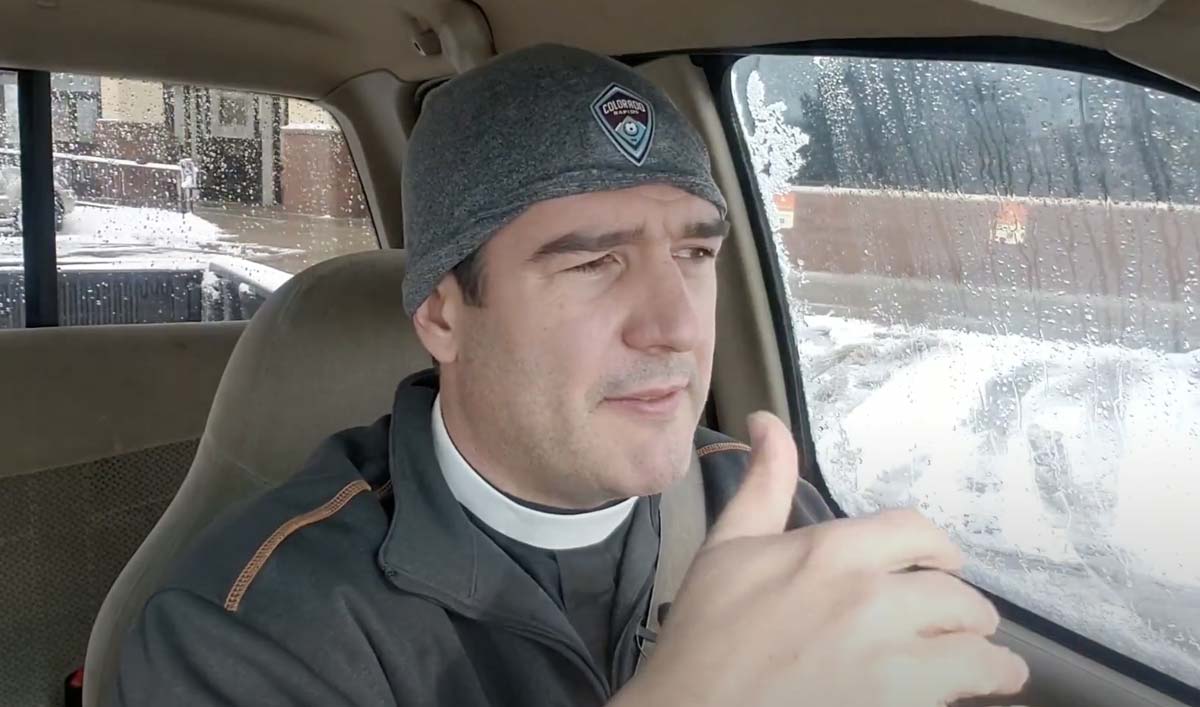
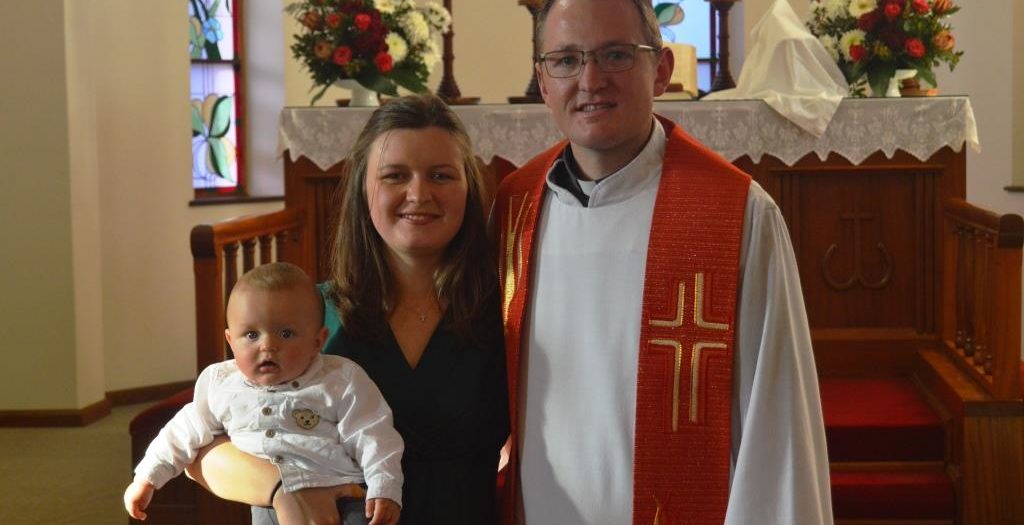
Pastor Andreas Albers was ordained in Kirchdorf on 28 July 2019 and has served the Our Saviour congregation since October 2019. He lives in Wartburg with his wife Maria, née Schmidt-Dahl, from Stelle (Germany) and their son Benjamin. Pastor Albers has written the required examination paper on the topic of Children in the Divine Service or Children’s Service?
Question (Q): Can you briefly explain what the paper is about and why you have chosen this topic?
Answer (A): As part of the second exam Bishop Reinstorf advised me to choose a practical topic. Children’s service is a very practical topic, because almost every congregation in our synod offers it on Sundays. I have long been interested in the question, whether the children’s service is seen as a replacement or an addition to the main service.
Q: Where does the children’s service originate?
A: The beginnings go back to two events: Sunday School and children’s instruction. The “Sunday School” started in England in the 18th century at the time of industrialization. Poor children, who had to work in factories during the week, could learn to read and write on Sunday afternoons using biblical stories. Sunday school quickly became popular in North America.
Sunday School came to Germany in the 1820s based on the English model. However, it didn’t really spread. When it was introduced in Germany again in the 1860’s, based on the American model, it spread quickly in the Evangelical (Methodist, Baptist) Churches. The Lutheran churches were initially critical of it. However, due to the fact that the Sunday School work of the Evangelical Churches drew children from the Lutheran parishes, the churches saw themselves forced to act and began to incorporate the elements of the Sunday school – under a new name: Children’s service.
This new children’s service also had its origins in children’s instruction, which had existed since the Reformation. Almost all Lutheran church constitutions of the 16th century provided for a service (mostly on Sunday afternoons) in which the catechism was to be taught. However, the children’s instruction lost importance over time. The introduction of Sunday School forced the churches in Germany to revive children’s instruction.
Q: How is the Lutheran understanding of the Church related to the children’s service?
A: Worship is where the church gathers around the gifts of grace. According to the Lutheran understanding, the church is “the congregation of saints, in which the Gospel is rightly taught and the Sacraments are rightly administered” (Augsburg Confession, Article 7). Into this fellowship, little infants are baptized and become part of the Christian community. A parish should therefore not give the impression of two different fellowships within their parish by having the divine service and children’s service parallel.
In the church, as in the household, children and adults learn from each other. Children are drawn into the divine service by adults and learn about the liturgy and the teaching of the church. Conversely, adults can also learn from children. According to Mark 10:13-16, their faith is a model for adults.
Q: According to the FELSISA constitution, the children’s service should be promoted. How do you think that should be done?
A: The children’s service itself is a good thing and I think it should be part of a church. Children should and may receive age-appropriate lessons. It becomes difficult when the children’s service is seen as a replacement and not as an addition to the divine service. This would convey that the children do not yet belong in the main service. The constitution of our synod confirms this: “Since the Sunday School does not replace the worship service, it should be conducted during the sermon, or may take place either before or after the service.” We should also put this into practice in our congregations.
Q: Which practical suggestions would you particularly like to see implemented in the FELSISA congregations?
A: At this point, I would briefly like to look away from the children and focus on us adults. Children are often only perceived as a disturbance in worship. Yes, small children can be loud and can cause unrest. Nevertheless, it is important to me that we treat these children with patience and love, take them seriously as fellow citizens in the Kingdom of Christ and welcome them in the services.
Many congregations are already familiar with the fact that children come to the altar with their parents during absolution or communion and receive the blessing by laying on of hands. In some congregations, however, this custom is still unfamiliar. By bringing our children to the altar from the very beginning, we express that they belong to the church of the saints and have their place in the divine service.
At the children’s church service, they have the opportunity to learn on their level about what is going on in the main service – about baptism, communion and liturgy. This cognitive knowledge about the service should then also be put into practice – they have to experience the service themselves. Children have to see, hear, smell and feel what is happening in the sanctuary. They can see and feel the blessing hands of the pastor, who acts in place of the good shepherd Jesus Christ. From childhood, they should respond in song, prayer and confession to the great deeds of God with their own tongues – even if they do not understand everything yet.
We can also accompany our children as they grow into an understanding of the divine service. A book that explains the liturgy in a child-friendly manner and with pictures can be of great help. The book “Worshiping with Angels and Archangels, An Introduction to the Divine Service” from the Concordia Publishing House offers this possibility. It would be worth considering getting such books for our congregations.
In addition, parents should not bring toys or food packaging for their children that make unnecessary noise. Parents can also prepare their children for the service at home and try to convey to them that one has to be quiet in the church. Above all, parents should give their children the desire and courage to come to the service. The best way to do this is leading by example.
Q: The title of the exam seems to indicate an “either-or”. Why do you think the children’s service is more of a “both-and”?
A: The title of the paper is deliberately formulated in a somewhat provocative way. We shouldn’t need to decide whether to either send our children to the children’s service or to take them to the divine service. The children’s church service has its rightful place in our congregations. However, it should remain where it was originally intended, namely next to the divine service. If the children’s service is an addition and not a substitute for the divine service, our children can attend both.
We thank Pastor Albers for the informative answers and wish him and his family God’s blessing for their service in the church and synod.
(The interview was conducted by Angelika Johannes, Panbult)